Some of the best nights of the year around Hicksville are also the loudest. A summer evening at the Defiance County Fair comes with plenty of noise.

The grandstand at the Defiance County Fair rarely stays quiet for long. Add the midway, live entertainment and an evening fireworks show and it’s easy to spend hours surrounded by loud noise.

Those are the sounds that make summer memorable. What rarely comes to mind is that a single fireworks blast reaches a volume far beyond almost anything else your ears are exposed to during the year.

Loud events are part of life here, and most of us wouldn’t want to miss them. Spending time at the fair, cheering from the grandstands or gathering for fireworks doesn’t have to mean thinking about hearing every minute of the night.

Knowing how much volume your ears are taking in, how long you’re exposed to it and how that noise can influence your hearing afterward puts those experiences into a different perspective.

How Loud Sounds Can Harm Your Ears

Loud sound doesn’t stay in the outer ear. It travels through the ear canal, moves the eardrum and sets the tiny bones of the middle ear into motion.

That movement reaches the fluid inside the inner ear, where every vibration is converted into electrical signals for the brain. The louder the noise the greater the force moving through that system.

Your ears aren’t designed to process extremely loud sound for long periods without strain. During intense noise, the structures inside the inner ear must respond to thousands of vibrations every second.

A brief burst from a firework isn’t processed the same way as normal conversation. Neither is standing near the speakers for several hours. The more that level of volume is repeated, the harder your ears have to work to keep up.

Common Noises That May Affect Hearing at Outdoor Events

Not every loud sound at an outdoor event comes from the main attraction. Several smaller noise sources can add up over the course of an afternoon or evening:

    • Fireworks launched nearby.
    • Tractor pulls and demolition derbies.
    • Concert speakers are close to the stage.
    • Air horns, whistles and crowd noisemakers.
    • Generators powering food vendors, rides or event equipment.
    • PA systems are used for announcements and live entertainment.
    • Engines from racing events, monster trucks or pulling competitions.

Comparing Noise Levels Between Fireworks and Live Music

Live concerts usually range from 95 to 110 decibels, although standing close to the speakers may push that even higher. The biggest difference is how it reaches your ears.

Fireworks deliver an intense burst that lasts only a moment, while live music surrounds you with loud noises for an entire performance.

A few minutes of fireworks are different from spending two or three hours near amplified speakers. Both expose your ears to sound levels well above the point where hearing damage becomes a concern.

How the Duration of an Outdoor Event Affects Hearing

One loud moment doesn’t tell the whole story. A festival that lasts six hours exposes your ears to far more volume than a twenty-minute performance, even if neither one seems especially loud on its own.

Music, announcements, cheering crowds and other background noise continue long after the headline event ends. Your ears don’t get a fresh start each time the volume drops for a few minutes.

Time also changes how your ears respond to the same level of sound. Standing near amplified music for ten minutes is different from standing there all evening.

The longer you’re surrounded by loud noise, the less recovery time your ears have before the next burst of noise arrives. That’s why two people at the same event may leave with different experiences, even if they heard many of the same noises.

Noticing Early Signs That Your Hearing May Be Affected

You don’t have to leave an event with painful ears for loud sound to have an effect. Sometimes the effects are subtle at first and become easier to notice once you’re back in a quieter place:

    • Sounds seem muffled or less distinct.
    • Ringing or buzzing continues after the event has ended.
    • Speech is loud enough, but certain words are harder to understand.
    • One ear sounds different than the other.
    • Music doesn’t sound as crisp as it did before the event.
    • You reach for the television or car radio volume sooner than usual.

Hearing Protection Options for Outdoor Gatherings

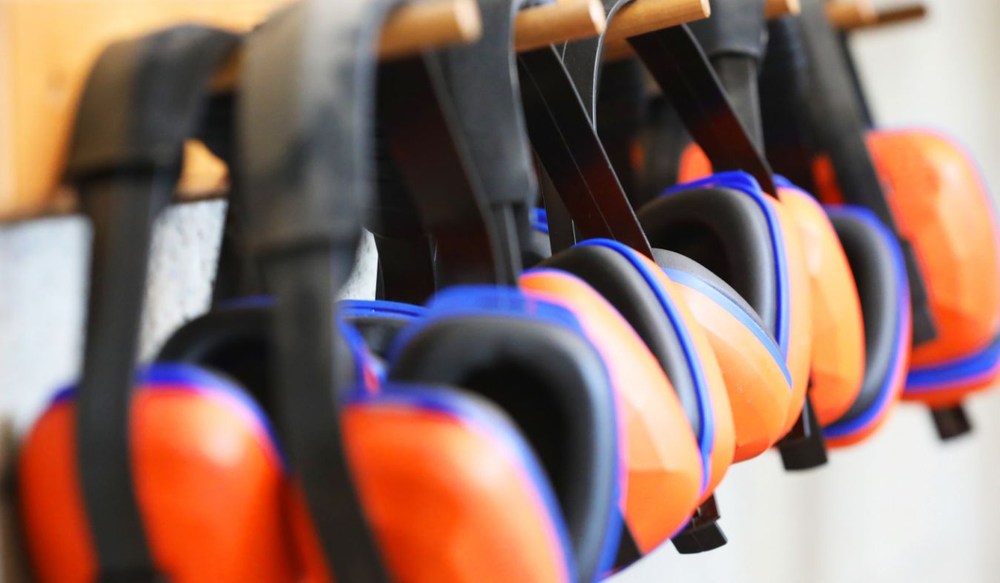
Musician’s earplugs lower the volume more evenly, so conversations and live music sound more natural. Earmuffs are often chosen for young children or for anyone who prefers not to wear earplugs inside the ear.

Comfort matters just as much as the type you choose. Protection that slips out or doesn’t seal properly won’t reduce as much volume as it should.

Some people keep disposable earplugs in the glove box, a purse or a jacket pocket so they’re available when plans change. Others prefer reusable earplugs that can be used throughout without needing a new pair for every event.

Using Earplugs and Earmuffs the Right Way for Best Results

Earplugs only reduce noise well when they sit far enough inside the ear canal. Foam plugs should be rolled tightly before they’re inserted, then held in place while they expand.

Reusable plugs need a snug seal. Earmuffs should rest flat against the head with the cushions fully surrounding the ears.

Glasses, hats and thick hair may leave small gaps that reduce the amount of volume being blocked. The noise reduction rating (NRR) is the number printed on hearing protection that estimates how much noise it reduces during laboratory testing.

A higher NRR usually means more reduction under those conditions. Real-world results depend just as much on proper fit and wearing the protection for the entire noisy event.

If you wear earplugs and earmuffs together, the protection increases, but the two NRR values aren’t simply added together.

The Importance of Planning Ahead for Hearing Protection

Hearing protection is one of those things that’s easy to leave behind until you realize you need it. By then, you’re already surrounded by loud noises and your options may be limited.

Keeping earplugs or earmuffs somewhere you can reach without thinking about it makes them much more likely to get used. A glove compartment, purse, backpack or work bag all work well.

Planning ahead also gives you more choices. You can pick the type that fits comfortably, check that it still fits properly and replace worn earplugs before you need them.

Choosing Quieter Spots to Lower the Risk of Hearing Loss at Events

Moving a little farther from the speakers or fireworks changes how much noise reaches your ears. This becomes less intense as the distance increases.

Even a few extra yards may lower your exposure without changing the experience very much. You can still enjoy the music, announcements or fireworks without standing in the loudest part of the crowd.

Where you stand also changes what you hear. Conversations are often easier to follow when the speakers aren’t pointed directly toward you.

Children don’t need to be close to the loudest activity to enjoy the experience. A small change in location may be all it takes to spend less time around the highest levels.

What Steps to Take if You Notice Ringing or Muffled Sounds After an Event

You know your own hearing better than anyone else. If things still don’t sound right after you’ve had time away from the noise, don’t keep wondering whether they’ll return to normal on their own.

An appointment with an audiologist can tell you whether your hearing has changed or whether your ears are still recovering from the loud noise.

You’ll complete a hearing test and talk through what happened before the ringing or muffled hearing began. Your audiologist will ask where you were, how close you stood to the noise and how long you were exposed.

Keeping Your Hearing Safe at Every Celebration

Loud gatherings are part of life, and most of us don’t think much about our hearing while we’re enjoying them. A concert, fireworks show or county fair can be over in a few hours.

The effects on your hearing don’t always end when the event does. Knowing how different kinds of noise affect your ears makes it easier to recognize when a little planning is enough and when it’s time to schedule a hearing evaluation.

If you’re curious about how recent noise exposure fits into your hearing health, we’re happy to talk it through with you. At Trinity Hearing Care in Hicksville, Ohio, we’ll review your hearing, discuss any recent loud events and explain what your test results mean.

We can also compare your current hearing with earlier tests if you’ve been seen before. Call us at (419) 416-6141 to schedule an appointment.